In the US, the booking fee belongs in the ticket price
Three US states now require the price on the ticket page to include every mandatory fee. A fee line at checkout no longer does the job.

Written by
Clair Durham
Read Time
4
min read
Posted on
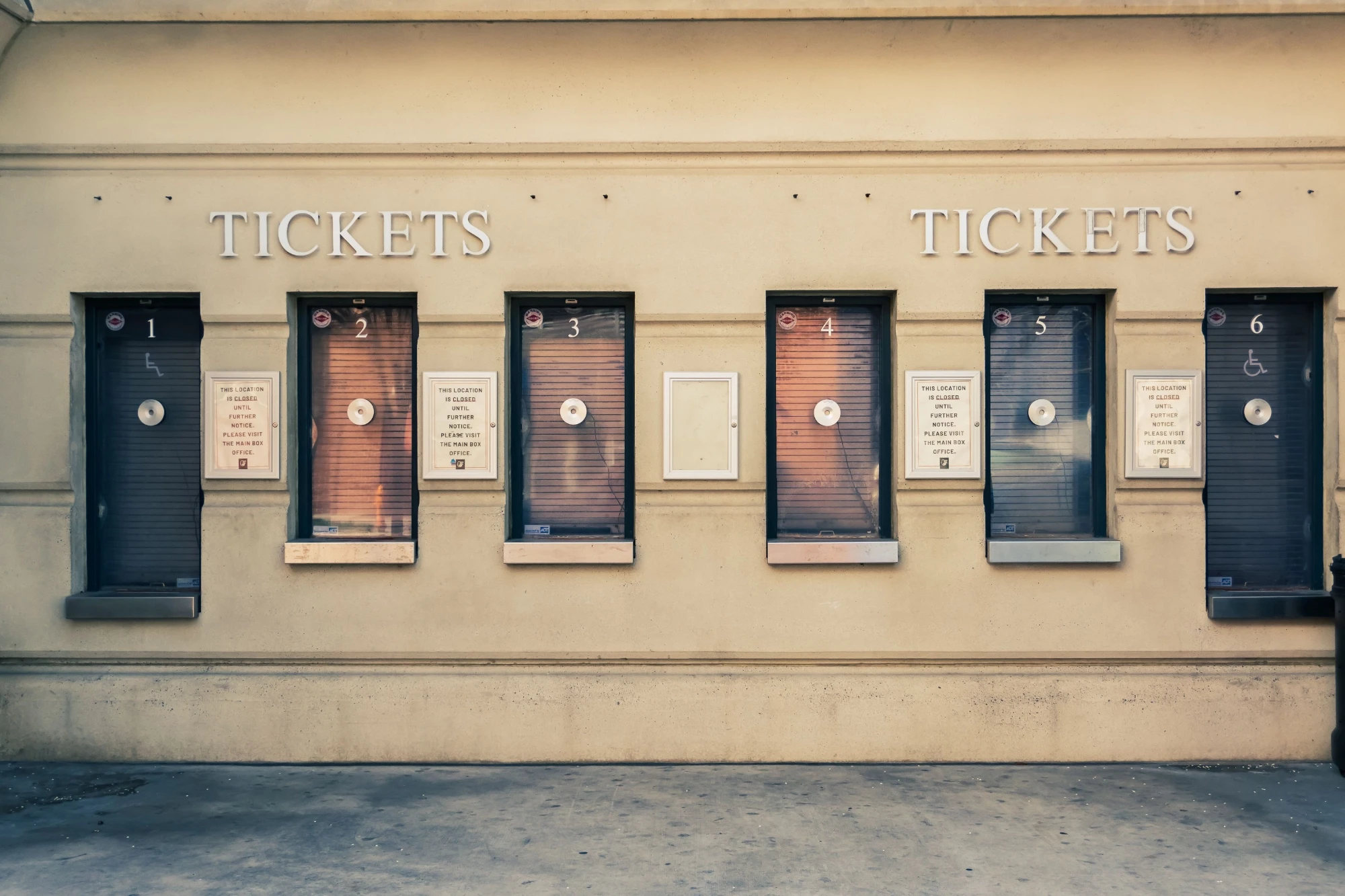
Take a theme park in California with a $49 day ticket on its website. A family puts four in the basket, and on the last screen a $3.50 service fee is added to each one. The fee is labelled, it appears before anyone pays, and since 1 July 2024 advertising that ticket at $49 has been against California law.
That date is when California’s SB 478 took effect. Minnesota followed on 1 January 2025 and Massachusetts on 2 September 2025. The usual question about a booking fee is who pays it. In these three states the first question is now where it is shown.
Three states say the listed price is the full price
California’s Attorney General puts it in one line: the price listed or advertised “must be the full price that the consumer is required to pay”. The law is section 1770(a)(29) of the Civil Code and covers most businesses. Only government taxes and reasonable shipping can sit outside the price.
Minnesota’s version is in section 325D.44 of its statutes and applies, in the Attorney General’s words, to “almost all industries”. It reaches anyone who advertises a price in Minnesota or to Minnesota consumers, and the remedies include civil penalties of up to $25,000 per violation.
Massachusetts wrote regulations (940 CMR 38.00) around a defined term, the Total Price: the maximum a consumer must pay. Where a seller names a fee, the name has to reflect what the money is actually used for.
None of the three limits what an attraction can charge. A zoo can sell a $52.50 ticket. What it cannot do is call it $49.
Showing the fee before payment is not enough
Most ticketing checkouts were built on the belief that a fee is fine as long as the buyer sees it before paying. Two of these states have answered that directly.
The Minnesota guidance asks whether a business can comply by disclosing mandatory fees separately from the advertised price, before the consumer finalises the transaction. The answer is “No.” California asks whether a business can list one price and state separately that a percentage fee will apply. Also no.
So a clearly labelled line in the basket does not rescue a low headline price. The number has to be right the first time it appears: on the ticket page, in the Google ad and on the poster at the gate.
Card surcharges follow the same logic. California treats a card fee as avoidable only if the customer can pay another way, such as cash. An online checkout that takes cards and nothing else has no other way, so the surcharge is part of the price.
The federal rule covers concerts and hotel rooms, not the gate
The FTC’s Rule on Unfair or Deceptive Fees took effect on 12 May 2025 and is often described as a national ban on junk fees. It is narrower than that. It covers two things: live-event tickets and short-term lodging. Live events means concerts, sport, theatre and other live performances.
General admission to a museum or an aquarium is not on that list. A ticketed summer concert on the lawn is, and so are the cabins or the hotel if the attraction has them. A resort park can therefore have the federal rule applying to its rooms and its concert series, and state law applying to everything it sells to a Californian.
Where the federal rule applies it adds a point about wording. The FTC tells businesses to describe what a fee is for and to avoid “convenience fees”, “service fees” and “processing fees”. Fees can be itemised, but the total has to be the most prominent figure on the page.
What is still allowed
Dynamic pricing is untouched. The FTC says businesses may adjust prices on demand or inventory as long as the pricing is not misleading, so a Saturday in July can still cost more than a Tuesday in March.
Discounts are fine too. California’s guidance uses the example of “half price after 4pm” and confirms that charging less than the advertised price breaks nothing.
Optional extras stay outside the ticket price until the visitor picks them. In the Massachusetts guidance, once a consumer selects a feature that increases the price, the seller must update the Total Price to match. A fast-track pass or a locker is added when it is chosen. A fee that every online buyer pays is not an extra.
Why we would put our own fee inside the price
Sailia charges a percentage of bookings, and the operator decides who pays it. It can be absorbed, or passed to the customer and shown as a booking fee at checkout.
For a US attraction our advice is to absorb it and set the ticket price to match. The family in the opening example pays $210 either way. With the fee inside the price, $52.50 is what the ticket page says, what the ad says and what the card is charged, in all 50 states, with no separate rule to track for each one.
It has a cost. A $52.50 ticket looks dearer beside a competitor still advertising $49 plus fees. In California, Minnesota and Massachusetts that competitor is now the one with the problem, and California’s Attorney General gives the reason plainly: truthful price advertising lets businesses compete fairly on price.
Table of Contents
Sign up. It’s like a message in a bottle, but faster.
We write emails you’ll actually open 😁
You may also like these
Related Post



Simplify your operation
Join more than 350 locations.